Green School Points
Each school year, the entire St. Mary School family works on completing Green School points to certify St. Mary as a Michigan Green School. To obtain Green School designation for the 2016 Green School Year (March 1, 2016-Feb. 28, 2017), St. Mary School must submit an application and documentation to describe how the school has completed a minimum of two activities from each of four categories: recycling, energy, environmental protection and miscellaneous. To view additional photos see the Growing Green Facebook page at https://www.facebook.com/StMarySchoolGarden/
Recycling
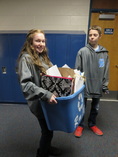
Coordinate a program for recycling at least two items. Recycling just two items counts for this green school point. NEW THIS YEAR, SMS is now recycling plastic bags in the school cafeteria. We thank Mr. Manore and our parent Bottle Brigade for taking our plastics home to recycle, our NJHS for sorting and delivering used markers, crayons and colored pencils to Arts and Scraps, eighth graders and teachers for recycling paper in our Abitibi paper bin, and school teachers and staff for recycling cardboard at home, donating cell phones to Cell Phones for Soldiers (https://www.cellphonesforsoldiers.com/) at Mount Clemens Public Library, and used batteries to Battery Giant.
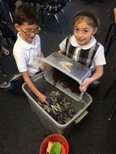
Composting food and organic wastes.+ NEW THIS YEAR, WE DELIVER! Fifth graders now deliver food scraps from the cafeteria to participating red wiggler worms in grades two through eight. PRESCHOOLERS NOW HAVE A WORM BIN and they think it is great. Before their worm bin was delivered, they loved digging for worms on the playground, so a worm bin right in their classroom is even better. Students in grades two through eight join the preschoolers in preparing worm beds by tearing and wetting newspaper and coconut coir. Then they add about 100 worms to the mix. Weekly they feed the worms food scraps from the cafeteria, which they bury in the bottom of the worm bin. Students are responsible for spraying the bedding to keep it moist and collecting the worm castings to add to school gardens at the end of the school year.
Conducting a Waste-Free Lunch Program.+
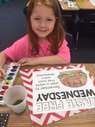
NEW THIS YEAR, since St. Mary School wants to boost student participation in the Waste Free Wednesday lunch program, beginning in January 2017, Kindergarten teachers created large 24”x36” posters for each month with a grid that counts to 500. Each time a student participates in Waste Free Wednesday, they will be given a sticker to add to the poster so we can chart our progress. It is our hope that participation will grow from month to month. The current poster is on display in the school cafeteria and one of our lunchroom helpers helps to monitor the lunches and award stickers every Wednesday. Once again, to reduce waste, students, parents and staff are asked to bring a waste-free lunch to school every day, but especially on Waste-free Wednesday. A waste-free lunch means packing all food and drinks in reusable rather than disposable containers, avoiding single serving snacks and single use bottles, cans and pouches. Both Kindergarten classes made Waste Free Wednesday Posters to promote the green school activity for all grades. Teachers discussed what makes a lunch waste free and what does not. They even opened a few lunch boxes and sorted the waste free items and those that were not to give students a better idea. Students and teachers posted the posters throughout the school even upstairs to remind the junior high grades!
NEW THIS YEAR, since St. Mary School wants to boost student participation in the Waste Free Wednesday lunch program, beginning in January 2017, Kindergarten teachers created large 24”x36” posters for each month with a grid that counts to 500. Each time a student participates in Waste Free Wednesday, they will be given a sticker to add to the poster so we can chart our progress. It is our hope that participation will grow from month to month. The current poster is on display in the school cafeteria and one of our lunchroom helpers helps to monitor the lunches and award stickers every Wednesday. Once again, to reduce waste, students, parents and staff are asked to bring a waste-free lunch to school every day, but especially on Waste-free Wednesday. A waste-free lunch means packing all food and drinks in reusable rather than disposable containers, avoiding single serving snacks and single use bottles, cans and pouches. Both Kindergarten classes made Waste Free Wednesday Posters to promote the green school activity for all grades. Teachers discussed what makes a lunch waste free and what does not. They even opened a few lunch boxes and sorted the waste free items and those that were not to give students a better idea. Students and teachers posted the posters throughout the school even upstairs to remind the junior high grades!
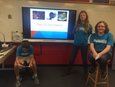
Energy Offer at least one teaching unit on alternative energy New this year, as part of an Alternative Energy Unit, eighth graders, under the leadership of Science Teacher, Erin Belknap, were assigned a form of alternative energy (geothermal, wind, solar, hydropower, tidal, nuclear), to research. Students then created a Powerpoint presentation to teach their classmates about that form. Students really became involved and interested in their assigned energy source - they went above and beyond in their research and presentations.
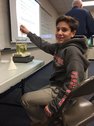
Sponsoring an alternative energy presentation, project or event (+) On January 20, 2017, Oakland University Environmental Science Professor David Newlin visited St. Mary School to present an Alternative Energy Slide Show and Biodiesel Presentation to eighth grade students in Mrs. Belknap's Science classes. Professor Newlin discussed energy consumption around the world, how energy consumption in the U.S. is changing, alternative energy in the U.S., and different uses of petroleum. He discussed and showed students different resources that are used to make oil, different oils that are used to make biodiesel and what biodiesel made from different oils look like. Then students assisted Professor Newlin as he demonstrated how biodiesel is made using soybean oil, sodium hydroxide and methanol. To conclude, students each wrote a sentence about what they learned.
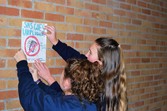
Implement a school energy-saving program – specific actions taken at your school building NEW THIS YEAR, to bring awareness of the need to save energy, St. Mary School, under the leadership of Kathy Falk and eighth grade students, will be going “unplugged”. On the second Monday of each month, beginning on January 11, 2017, once a month classrooms will operate with no lights and no technology. Classrooms will work by natural light, pen, pencil, and paper. We are asking our families to support this project by refraining from technology (TV, cell phones, iPads, etc.) at home on those dates as well. To prepare to be unplugged eighth grade students create and hang, "SMS Unplugged" posters throughout the school, and parents are asked to support the project via email, the Growing Green Facebook Page and the "Green School News" blog.
|
Environmental Protection
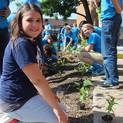
Establish or maintain a natural Michigan garden project with native plants or vegetables. Grown produce is used in teaching units or donated to a community organization + NEW THIS YEAR, to expand a natural Michigan garden project, St. Mary School applied for and was awarded a grant from the Wildflower Association of Michigan to complete a project entitled the Growing Green Project. The purpose of the Growing Green Project is to add additional native host and nectar plants that attract hummingbirds and butterflies to school gardens, to provide students with a hands-on opportunity to promote biodiversity, to observe and learn about ecosystems and to secure the future of native plants and animals, to expand the use of SMS gardens as an outdoor classroom, to further educate the St. Mary School teachers, students and parents about the value and beauty of native plants, to register the garden as a Pollinator Garden and help the school attain certification as a National Wildlife Federation Schoolyard Habitat, to beautify the community, to serve as an educational resource for the local community, and to inspire citizens and businesses to incorporate native plants in their landscaping. To complete the project, all students in grades one through seven planted, watered and mulched over two hundred plants on Growing Green Day, June 1, 2016 and participated in an interactive presentation by Grant Advisor, Michelle Serreyn, Laboratory Coordinator, Biological Sciences, Wayne State University. With the help of volunteer students, parents and Macomb County Master Gardeners the new plants are watered and maintained through the summer months. On June 25, 2016 SMS Growing Green Project received positive feedback and support from over fifty visitors during the Mt. Clemens Crocker House Garden Walk. 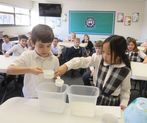
Participate in activities promoting the health of any Michigan watershed On March 21, 2016, the second graders participated in the MSU Extension's Water Conservation Program. In this program, the children explore water conservation topics such as where water comes from and how to protect and conserve this precious resource using hands-on activities, demonstrations and games. The program teaches children about the water cycle, how water gets in and out of our homes, how we use water, and conservation choices to help children learn the importance of water conservation. To reinforce learning, students create their own water cycle posters!
|
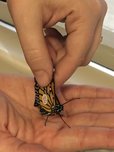
Establish or maintain an outdoor animal habitat project. During 2016 St. Mary School's butterfly habitat project/Save the Monarchs Project grew with the expansion of the awning garden to accommodate additional milkweed plants, the redirection of rainwater from the roof into the awning garden and the addition of two more classes. Teachers requested that additional milkweed be planted in the gardens along Grand Avenue to provide easier access to food for the monarch caterpillars they would be raising. To fulfill this request, in spring 2016, Learning Center students, under the direction of teacher, Amy Perna, planted additional swamp milkweed seeds in the awning garden and planted tropical milkweed plants in Mrs. Mares garden.
Due to a severe shortage of monarch eggs and caterpillars in Southeast Michigan this year, caterpillars for the Save the Monarch Project were purchased from Brenda's Butterfly Habitat (www.facebook.com/BrendasButterflyHabitat) for $1 each with all proceeds donated to Monarch Watch (monarchwatch.org.) On August 25, 2016 teacher, Mrs. Amy Perna, delivered the monarch caterpillars, habitats and monarch tags to participating classrooms. NEW THIS YEAR, monarch butterflies that were raised and released were tagged using tags acquired from Monarch Watch. http://monarchwatch.org/tagmig/tag.htm The purpose of the tagging is to associate the location of capture with the point of recovery for each butterfly. The data from these recaptures are used to determine the pathways taken by migrating monarchs, the influence of weather on the migration, the survival rate of the monarchs.
This September the kindergartners watched their caterpillar as she munched through the milkweed leaves and make her way to the top of net to make her chrysalis! After patiently waiting the students discovered movement in their habitat and they watched Bella come into the world as a beautiful Monarch Butterfly! Teachers and students read the Very Hungry Caterpillar in anticipation of the day! Learning Center teacher, Amy Perna helped the kindergarteners tag the butterfly and determine the butterfly’s gender. The Kindergarten classes took Bella out to release her and watch her fly away!
As part of SMS Save the Monarch project, In fall 2016 third grade classes at St. Mary, under the leadership of Spanish Teacher, Ms. Lea Gonzales, began the Journey North Symbolic Migration Project (https://www.learner.org/jnorth/tm/symbolic/About.html) which requires drawing a monarch butterfly and sending it to another school in the United States. The project symbolizes a migration of the Monarch Butterfly (in the fall it migrates south and in the spring it migrates north). Over 60,000 students across Mexico, Canada & the United States participate in this symbolic migration each year. Students discuss the butterflies and also how we can contribute to their protection. This projects helps to build bridges of hope through education, cooperation, conservation and ambassadorship.
Due to a severe shortage of monarch eggs and caterpillars in Southeast Michigan this year, caterpillars for the Save the Monarch Project were purchased from Brenda's Butterfly Habitat (www.facebook.com/BrendasButterflyHabitat) for $1 each with all proceeds donated to Monarch Watch (monarchwatch.org.) On August 25, 2016 teacher, Mrs. Amy Perna, delivered the monarch caterpillars, habitats and monarch tags to participating classrooms. NEW THIS YEAR, monarch butterflies that were raised and released were tagged using tags acquired from Monarch Watch. http://monarchwatch.org/tagmig/tag.htm The purpose of the tagging is to associate the location of capture with the point of recovery for each butterfly. The data from these recaptures are used to determine the pathways taken by migrating monarchs, the influence of weather on the migration, the survival rate of the monarchs.
This September the kindergartners watched their caterpillar as she munched through the milkweed leaves and make her way to the top of net to make her chrysalis! After patiently waiting the students discovered movement in their habitat and they watched Bella come into the world as a beautiful Monarch Butterfly! Teachers and students read the Very Hungry Caterpillar in anticipation of the day! Learning Center teacher, Amy Perna helped the kindergarteners tag the butterfly and determine the butterfly’s gender. The Kindergarten classes took Bella out to release her and watch her fly away!
As part of SMS Save the Monarch project, In fall 2016 third grade classes at St. Mary, under the leadership of Spanish Teacher, Ms. Lea Gonzales, began the Journey North Symbolic Migration Project (https://www.learner.org/jnorth/tm/symbolic/About.html) which requires drawing a monarch butterfly and sending it to another school in the United States. The project symbolizes a migration of the Monarch Butterfly (in the fall it migrates south and in the spring it migrates north). Over 60,000 students across Mexico, Canada & the United States participate in this symbolic migration each year. Students discuss the butterflies and also how we can contribute to their protection. This projects helps to build bridges of hope through education, cooperation, conservation and ambassadorship.
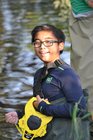
Participate in a local community environmental issue by activities such as letter-writing, attending public hearings, raising funds or community outreach (+) On May 5 and October 20, 2016 sixth graders participated in the Stream Leaders field trip. Stream Leaders is a field trip in which sixth and seventh grade students go out into the Clinton River and assess the physical, biological and chemical conditions in the Clinton River Watershed. They measure the width, depth and speed of the river and test the water for pH, phosphates, nitrates, dissolved oxygen, temperature, turbidity, fecal coliform bacteria, and biological oxygen demand. This data is used by the Clinton River Watershed to monitor waters throughout the year. Students also study which species are in the water, which give a good indication as to how healthy the waters are. On November 15, 2016, students participated in the Stream Leaders Student Congress. During a conference-style atmosphere students present their findings to other students in the Macomb County area. They learn about the findings of other rivers and bodies of water in the area and see how their research has made a difference in the water quality of the rivers around us. Students attend breakout sessions lead by environmental and STEM professionals in their community focused on relevant environmental topics.
|
Miscellaneous
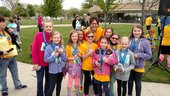
Sponsor an endangered or threatened species and publicize the activity. NEW THIS YEAR, brownie girl scout troop 71072 from St. Mary School, under the leadership of scout leader, Judy Dobrzycki, researched reasons why the manatee is endangered and what we can all do to help them. The brownies wanted to bring awareness to others so they gave a presentation to the first grade classes educating them on the reasons why the manatee is endangered, such as habitat destruction and pollution. They made posters to educate about how people can help and a poster to promote the "Save the Manatee 5K Run/Walk" that they were participating in. Brownie scouts met with the organizer of the 5K to learn more about how we could help. They finished their project by participating in the "Save the Manatee 5K Race/Walk" on May 21, 2016 at Lake St. Clair Metropark and making a symbolic adoption of a manatee on behalf of St. Mary School at savethemanatee.org. |
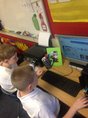
Sponsor an endangered or threatened species and publicize the activity. . In March 2016, third graders worked in groups with other students to research endangered animals, under the direction of their teachers Audrey Barkus and . Emily Urban. Each group chose an animal that they would like to research. As a class we spent a few days reading books and researching on the computer our animal choices. Each group then completed a written research paper and poster on the endangered animal of their choice to present to the school. Students created posters encouraging the school to come vote for their chosen animal on Earth day. After our research was done we discussed as a class what we learned from this assignment and majority of the class agreed they had learned ways to improve nature and how humans can help. On Earth Day, April 22, 2016 students and staff voted to make a symbolic adoption of a honey bee and a giant panda. In October 2016, media specialist, Rose Madonia made these symbolic adoptions through the National Wildlife Federation (http://www.shopnwf.org/Adoption-Center/index.cat) and the World Wildlife Federation (https://gifts.worldwildlife.org/gift-center/gifts/Species-Adoptions) on behalf of the school and compiled adoption bags containing adoption certificates, animal facsimiles, books and DVDs that rotate throughout primary and intermediate school classrooms to help students learn more about the animals the school has adopted.
Coordinate an exchange or drive to collect used or unwanted items within the school or community for repurpose.+
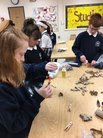
Under the direction of Art Teacher, Karen Clara, art students and Art Club student members collected, cut and glued toilet paper rolls to upcycle them into snowflake ornaments. The students rolled the snowflakes in glue and glitter and hung them on a Christmas Tree along with twinkle lights to create a Merry "Green" Christmas Tree for donation to The Anton Art Center. The tree was displayed at the 2016 Anton Art Center Christmas Market, 125 Macomb Place, Mt. Clemens and auctioned for $150 with the proceeds to benefit the Mt. Clemens Anton Art Center.
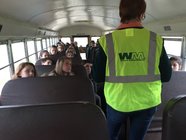
Host an environmental or energy speaker, event or field trip. NEW THIS YEAR, on March 10, 2016, St. Mary School National Junior Honor Society students traveled to Arts and Scraps (www.artsandscraps.org) 16135 Harper, Detroit. While there, the students sorted recycled materials to be used in craft kits, assembled many kits for future programs, helped clean the warehouse, and sorted boxes to be reused. The students also delivered used art supplies recycled by all in St. Mary School. Like new, used, and broken crayons all went to Arts and Scraps to be used for projects they do. Students learned, "If you work with others, you can achieve so much more than doing things by yourself. It’s like that with the Earth. We all have to do our part to save it and it may not seem like you yourself is making a big impact, but if we all work, it will be a big impact!” On April 29, 2016, 7th grade students were given a bus tour of Pine Tree Acres Waste Management landfill (36600 29 Mile Rd., Lenox, MI 48048, https://www.wmsolutions.com/locations/details/id/80) where they were shocked to learn a handful of things. One student was very shocked to learn “just how many pounds of trash are emptied there daily and had no idea they have to redo an entire ecosystem at times.” Pine Tree Acres Landfill has more than 100 acres of dedicated wildlife habitat. Located in Lenox Township the habitat preserve is utilized for educating visitors about the importance of connecting with nature, and it provides habitat for wood ducks, blue birds, bats and other migratory birds and waterfowl. Students do not think about where all the trash they dispose of goes, as many people don’t. As a green school, we hope to sway the minds of students and families, so that they reduce the amount of trash they use each day.
